Home Services CCTV Systems Fire Alarms Intruder Alarms Access Control 24/7 Monitoring Nurse Call Pricing About Blog Contact Book a free survey
500+ cameras monitored daily

See everything. Miss nothing.

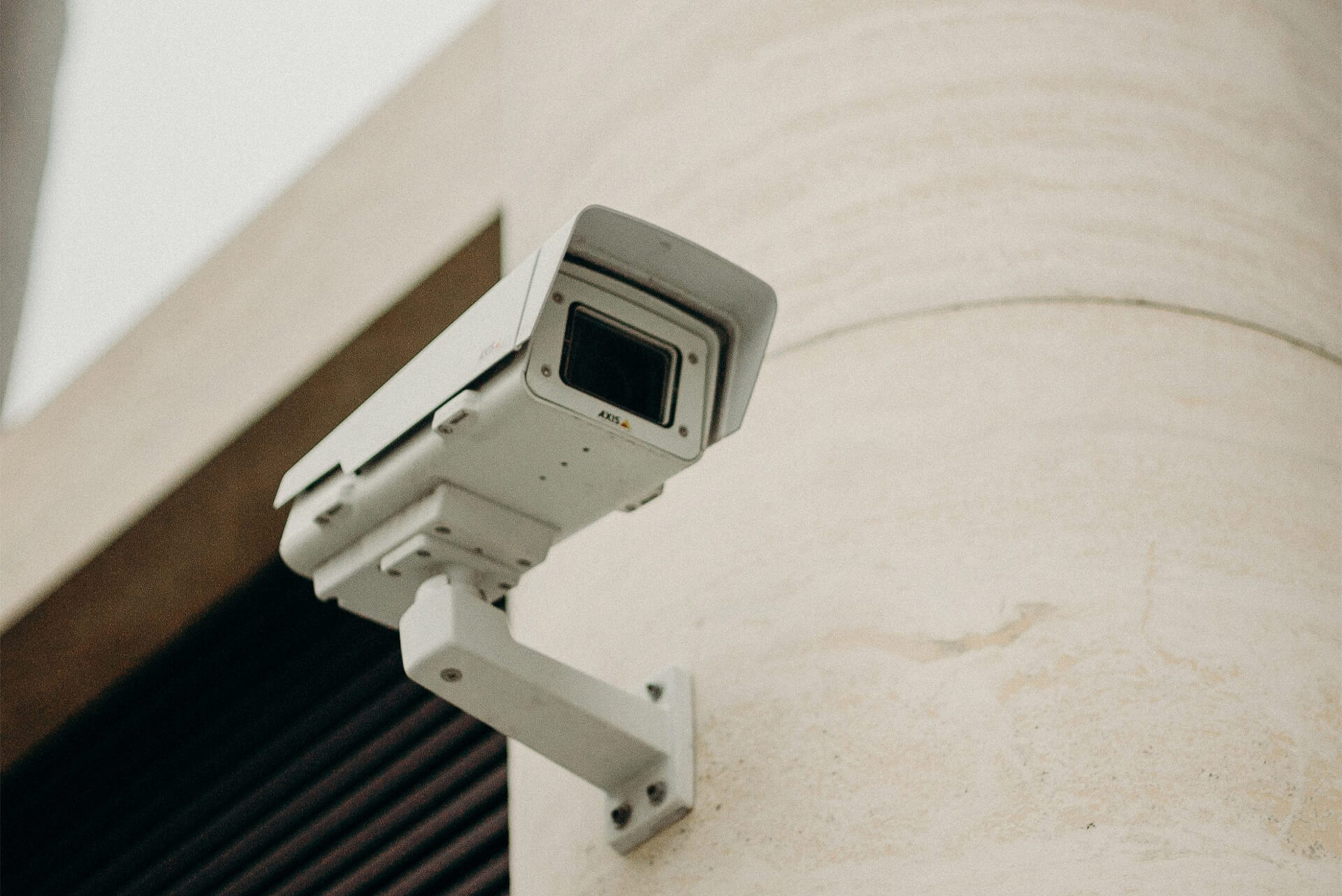
Commercial CCTV designed around your site, not pulled from a catalogue. We survey your premises, identify the blind spots, and design a system that covers what actually matters.

What you get

Footage that stands up

HD and 4K cameras that capture faces, plates and incidents clearly enough to use as evidence. Not just recording. Proof.

Watch from anywhere

Live feeds on your phone, tablet or laptop. Check in from home, from the road, or from another site entirely.

Alerts, not noise

Intelligent motion detection filters out wind, wildlife and shadows. You get notified when it matters, not every five minutes.

Stored and secure

Cloud and local storage options so footage is always accessible and never lost. Retention tailored to your compliance requirements.

24/7 visibility

Advanced infrared cameras deliver usable footage in complete darkness. Your coverage doesn't clock off when the lights go out.

Installed properly

Our engineers survey, design and install. Clean cable runs, optimal placement, and a system that works from day one.

Free download

The commercial CCTV buyer's toolkit

Three working documents: a survey prep worksheet, a camera-by-camera specification template using the BS EN 62676-4 pixel-density bands, and a scorecard for comparing up to three quotes, including five-year cost. Four pages, PDF.

We'll send the occasional useful update. Unsubscribe any time.

Your guide is ready

Download the PDF

Commercial CCTV: the short answer

Commercial CCTV is a system of cameras, a recorder and viewing software designed to deter crime and capture usable evidence on business premises. It suits any site with stock, vehicles, staff or public areas to protect: warehouses, yards, food plants, offices, shops, schools and care homes. Systems are designed to BS EN 62676, and footage must be handled under UK GDPR. As a guide, a small commercial system of 1 to 10 cameras costs £1,500–£3,000 installed, confirmed at a free site survey.

The standards that apply to commercial CCTV

BS EN 62676. The standard series for video surveillance systems used in security applications. Part 4 is the application guide installers design to. It defines what each camera is for by the pixel density it achieves on the target: enough to detect a person, observe activity, recognise someone you know, or identify a stranger. Identification needs 250 pixels per metre at the target. We state the purpose of every camera on the design, so you know which cameras will identify a face and which only show movement.

BS 8418. The code of practice for detector-activated, remotely monitored CCTV. If you want police to respond to activations from a monitored CCTV system, it must be designed, installed and maintained to BS 8418 and monitored from a compliant centre. Without it, monitored CCTV gets operator and keyholder response, not police response. See CCTV monitoring.

UK GDPR and ICO guidance. Cameras that capture identifiable people are processing personal data. The ICO expects a documented purpose, payment of the data protection fee, clear signage, secure footage, a defined retention period and the ability to answer a subject access request within one month. A data protection impact assessment before you install or change a system is good practice. Our CCTV compliance guide covers each step.

The Surveillance Camera Code of Practice. Issued under the Protection of Freedoms Act 2012, it binds police and local authorities and is good practice for everyone else. Its twelve guiding principles, from a clear purpose to regular review, make a useful checklist for any business system.

How a CCTV project runs

  • Survey. An engineer walks the site with you and notes the risks, entry points, lighting, cable routes and where the recorder should live. Free, with no obligation.
  • Design and specification. A camera-by-camera schedule: position, lens, resolution, purpose under BS EN 62676-4, and the retention period.
  • Quote. Itemised, so you can compare like for like: every camera, recorder, drive, cable run and labour element listed.
  • Installation. Our own engineers, clean cable runs, and work phased around your operating hours where needed.
  • Commissioning and certification. Every camera aligned and checked by day and night, recording and retention confirmed, and the system certificated under our SSAIB registration (NORF034).
  • Handover and training. App set-up, user accounts with the right permissions, how to find and export footage, plus template signage and a CCTV policy checklist.
  • Maintenance. Planned visits, firmware updates and fault response. Maintenance contract customers get a 4-hour response to emergencies and a same-day response to non-emergency faults.

What the price covers

Our quotes include the survey, design, cameras, a recorder with storage sized to your retention period, cabling and containment, mounting, network configuration, remote viewing set-up, commissioning, certification, signage templates and handover training. Monitoring, the maintenance contract and specialist access such as a boom lift are quoted separately where the survey shows they are needed. If another quote is much lower, check what it leaves out. Cabling, storage and commissioning are the usual gaps.

How much does commercial CCTV cost?

These are guide prices from our commercial CCTV cost guide, confirmed at a free site survey:

  • Small system, 1 to 10 cameras: £1,500–£3,000
  • Medium system, 10 to 25 cameras: £3,500–£7,500
  • Large system, 25+ cameras: £10,000–£20,000+
  • Per camera installed: £150–£300 basic, £250–£450 mid-range, £400–£600+ high-spec

Enhanced systems add around 15 to 20 percent and high-security systems 30 to 40 percent. The first few cameras cost the most, because the recorder, storage and network have to go in first. After installation, professional monitoring typically costs £15–£40 per camera per month and annual maintenance £150–£350. For an instant indicative figure, use the pricing calculator.

Who needs commercial CCTV in East Anglia

Most of our CCTV work is for sites like these across Norfolk, Suffolk, Cambridgeshire and Essex:

  • Food production: goods-in, dispatch and perimeters, with housings suited to wash-down and cold areas.
  • Logistics and warehousing: ANPR at gates, yard and loading bay coverage, and evidence for damage and loss disputes.
  • Care homes: entrances and grounds, with placement that respects residents' privacy.
  • Schools and academies: perimeters, car parks and entrances, designed around safeguarding policy.
  • Offices and business parks: receptions, car parks and out-of-hours protection.
  • Retail: tills, stockrooms and entrances, with footage clear enough for the police.
  • Housing and managed blocks: communal areas, bin stores and car parks, designed with residents' data rights in mind.

CCTV maintenance and servicing

Camera systems degrade quietly. Lenses get dirty, spiders nest on infrared housings, hard drives fail and trees grow into the field of view. Nobody notices until the footage is needed. A maintenance visit checks every camera's image by day and night, cleans housings, confirms recording and retention, checks hard drive health, applies firmware updates and checks that remote access is secure. Annual maintenance typically costs £150–£350. Maintenance contract customers get a 4-hour response to emergencies and a same-day response to non-emergency faults. We can usually take over systems another company installed, after a survey.

Guides and further reading

CCTV Systems

Camera technology, specified to your site

Modern CCTV is far more than a recording device. A food processing plant needs hygiene-zone coverage and audit-grade recording. A logistics yard needs ANPR at every gate. Understanding the options helps you specify the right system for your site and budget.

  • Infrared (IR) cameras: automatic day/night switching for 24/7 outdoor coverage
  • ANPR: number plate recognition that integrates with access control and parking
  • Facial recognition: flag VIPs or unwanted visitors, support access control
  • Two-way audio: operators speak directly to people on site
  • Video analytics: loitering, line-crossing and object-removal detection
  • Real-time alerts: instant notifications to smartphones or the control room
Talk to an engineer
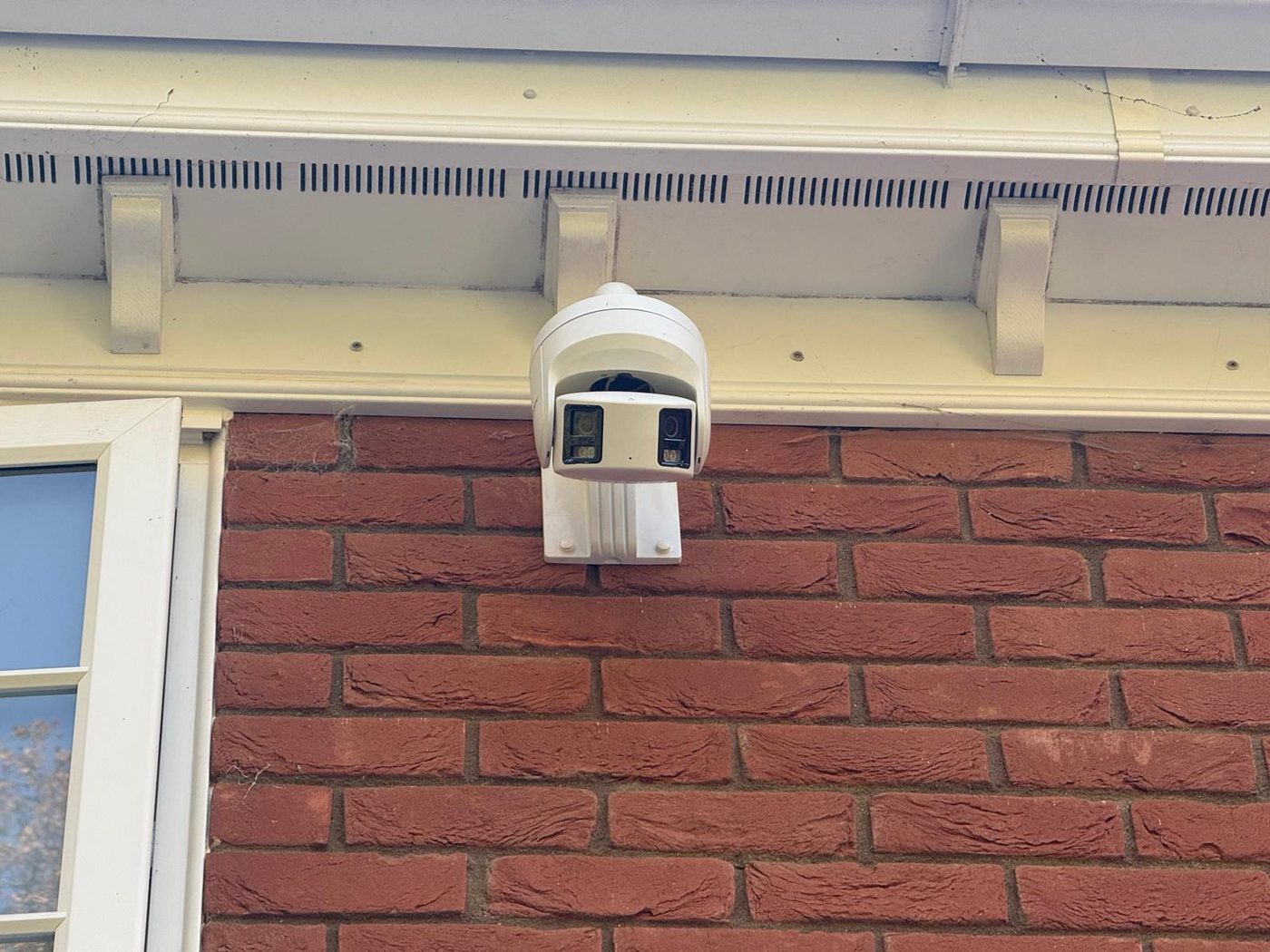
Dome CCTV camera installed by Hawthorne
Common questions

CCTV Systems, answered.

A small system of 1 to 10 cameras typically costs £1,500–£3,000 installed, a medium system of 10 to 25 cameras £3,500–£7,500, and larger estates £10,000–£20,000+. Use our pricing calculator for an instant indicative figure, then we confirm with a free site survey.

Yes, every system we install supports secure live viewing and playback from your phone, tablet or laptop, from anywhere.

We design for evidential quality: camera placement, resolution and retention are specified so footage of faces, plates and incidents stands up for police and insurers.

We can. Our partner Fenix's 24/7 UK control room provides live video verification, so alarms are checked by a trained operator before anyone is dispatched.

We specify by site rather than brand loyalty, but much of our commercial work is Hikvision, where we hold Platinum Partner status. Whatever the manufacturer, the design, installation and certification standards are the same.

There is no fixed legal period. UK GDPR says keep personal data no longer than your purpose needs, and for most commercial sites that means around 30 days: long enough to notice and investigate an incident. Footage of a specific incident can be exported and kept longer while it is being dealt with. Write the period into your CCTV policy and set the recorder to overwrite automatically. We size storage to your retention period at design stage, because retention and resolution together decide how many drives the recorder needs.

Almost every business operating CCTV that captures identifiable people must pay the ICO data protection fee, from £52 a year for small organisations. You also need signage, a documented purpose and a way to handle subject access requests, which must be answered within one month. None of this is difficult, but it is the first thing checked after a complaint. We provide template signage and a CCTV policy checklist with every commercial installation. Our CCTV compliance guide covers the detail.

Only if the system is built for it. Police respond to detector-activated, remotely monitored CCTV when it is designed, installed and maintained to BS 8418 and monitored from a compliant centre. That shapes the detection, lighting and camera layout so an operator can confirm an intruder quickly. Systems outside BS 8418 can still be monitored, with operators issuing live audio warnings and calling keyholders, which is how many commercial sites are protected. We will tell you at survey which route suits your site and budget.

Often, yes. Existing network cabling can usually carry new IP cameras if it tests sound, and some analogue coax can carry HD-over-coax cameras. We test before we promise. If the cameras are only a few years old and from a supported manufacturer, replacing just the recorder can be the sensible option. Where cabling is damaged or the equipment is no longer supported, a phased replacement is usually cheaper than repairing a failing system twice. The survey tells you which applies.

Free site survey

Tell us about your site.

Name, email and a line about the building is enough. An engineer replies within one working day.

Enquiry sent

Thanks, we'll be in touch within one working day. Need us sooner? Call 01603 425 100.

Don't just record, respond

Want your cameras monitored 24/7?

Installation is only half the picture. Our partner Fenix's UK control room can watch your cameras live, verify genuine threats and escalate to your keyholders or the police in real time, across Norwich, Norfolk and East Anglia.

Explore CCTV monitoring
Monitoring operators reviewing live CCTV feeds

Ready to see what you've been missing?

Book a free site survey. We'll show you exactly what your premises needs. No obligation, no pressure.